Search results for: “l”

  • Respite Care

    What is Respite Care?

    Respite care is short term care that helps a family take a break from the daily routine and stress. It can be provided in the client’s home or in a variety of out of home settings.

    Respite care is an essential part of the overall support that families may need to keep their child with a disability or chronic illness at home.

    Since not all families have the same needs, respite care should always be geared to individual family needs by identifying the type of respite needed and matching the need to the services currently available, or using this information to develop services where none exist. Once identified, it is also important for families to have ready access to that type of respite, in an affordable form.Regardless of the type of respite program utilized, the emphasis should be on orienting services toward the entire family. It is also important to bear in mind that the child will change as he or she grows and develops into an individual with his or her own personality and ideas.


    In many families, it is common for children to attend day care or after-school care, interact with peers and adults outside the family, and stay with a child care provider while their parents enjoy an evening out. Respite provides these same opportunities for children with special needs.

    For older individuals with a disability, respite can assist in building skills needed for independent living. Since the most appropriate living situation for many adults with a disability is in a group home or other supported environment, out-of-home respite care can enable families to test this option, explore community resources and prepare themselves and their family member with a disability for this change.

    States and communities are recognizing that respite care also benefits them. On average, the costs for respite services are 65 to 70 percent less than the costs of maintaining people in institutions (Salisbury and Intagliata, 1986). The cost effectiveness of respite services allows scarce tax dollars to be used for additional community based services. During the previous decade, over 30 states passed legislation for in-home family support services, including respite care, using either direct services or voucher systems (Agosta and Bradley, 1985).

    With the passage of the Children’s Justice Act (Public Law 99-401) and its amendment, the Children’s with Disabilities Temporary Care Reauthorization Act (P.L. 101-127), respite care has gained support at the Federal level. This legislation authorized funding to states to develop and implement affordable respite care programs and crisis nurseries. Unfortunately, while this Federal funding provides relief for some families, access and affordability continue to be issues for many families in need. Every state dispensed different versions of the services, and individual agencies devised their own criteria for length of time and funding allotments.

    Thus, in spite of the availability of government funding in some areas, many respite care programs must charge for their services. This practice reduces expenses for providers and makes it possible to serve more families. However, charging for respite services can limit their availability to those families who can afford the fees.

    RESPITE CARE SUGGESTIONS FOR PARENTS Parents deciding to leave their child who has special needs in the care of someone else, either in or outside their home, may experience a variety of hesitations. It is important that as a parent you become comfortable with your decision and develop the trust critical to maintaining the peace of mind necessary for relaxation and enjoyment. One way to accomplish this goal is to begin now to think about respite care and whether you, your family, and your child with special needs would benefit from it.

    Many agencies and organizations have information on respite care services. (For a referral, contact the National Respite Locator Service, operated by the ARCH National Resource Center            (919) 490-5577       ). In general, seek out groups or professionals who work with children your child’s age. For example, if your child is in preschool, contact the school and discuss the need for respite care with the staff. If there is a parent group associated with your school, or if there is a local parent group concerned with children who have needs similar to your child’s, ask them. If your child is an adolescent, talk to the staff at his or her school or, again, identify parent groups in your area with needs similar to yours.

    The following list presents some of the types of groups you may want to contact in seeking services. Many will be listed in your telephone book. If you experience difficulty locating the organization in your community, often a state contact can be made. Additional resources are listed at the end of this Briefing Paper.

    State and Local Government Agencies

    * State Department of Mental Retardation

    * State Developmental Disabilities Council

    * State Program for Children with Special Health Care Needs (formerly Crippled Children’s Services)

    * Departments of Health and Human Services, or Social Services

    * Department of Mental Health

    * State and local Departments of Education

    * State Protection and Advocacy Agency

    State and Local Disability or Support Groups

    * The Arc

    * United Cerebral Palsy Associations, Inc.

    * Autism Society of America

    * Brain Injury Association

    * Mental Health Association and CASSP

    * Spina Bifida Association

    * National Easter Seal Society

    * Parent Training and Information Center

    * University Affiliated Program(s)

    What should you know when seeking respite care services in your community?

    Ask yourself the following questions. The information will be helpful to you when contacting agencies

    in your local community about respite care.

    1. What kind of services do I need? (Long-term, short-term, or both? Why?)

    2. Do I prefer services in my home, a cooperative, or in an outside setting? (This will depend on the

    type of service you need.)

    3. Can I donate my time to a cooperative, or is it better for me to obtain help from a respite agency?

    4. Does this agency provide the types of service I need?

    5. Is there a cost for the service?

    6. If I can’t afford the service, are there funds available to assist me?

    7. Who is responsible for the direct payment to the provider?

    8. How are respite providers selected?

    9. Are the providers trained?

    10. How many hours of training have they had?

    11. Do these providers have training in First Aid and CPR?

    12. What other areas are covered in their training?

    13. For out-of-home care, does anyone monitor the facility for safety and health measures?

    14. Will I be able to have a prior meeting with the care provider?

    15. Will I have an opportunity to provide written care instructions to the provider?

    16. Will I have an opportunity to assist in training the provider with reference to my son’s/daughter’s needs?

    17. What is the policy that covers emergency situations?

    18. Will I have to carry additional insurance to cover the provider while he/she is in my home?

    19. Is there a policy which deals with mismatches between providers and the family?

    20. Can I request a specific care provider and have the same person with my child each time?

    21. Will the respite care provider care for my other children too?

    _____________________________________________

    ADDITIONAL RESOURCES

    ARCH National Resource Center. (1995). “ARCH national directory of crisis nurseries and respite care programs.” Chapel Hill, NC: Author. (Available from ARCH National Resource Center, Chapel Hill Training-Outreach Project, 800 Eastowne Drive, Suite 105, Chapel Hill, NC 27514. Telephone:             1-800-473-1727      ;             (919) 490-5577      .)

    Borfitz-Mescon, J. (1988, April). “Parent written care plans: Instructions for the respite setting.” Exceptional Parent, V (No.), 20-25.

    Carney, I., Getzel, E.E., & Uhl, M. (1992). “Developing respite care services in your community: A planning guide.” Richmond, VA: The Respite Resource Project, Virginia Institute for Developmental Disabilities. (Available from the Respite Resource Project, Virginia Institute for Developmental Disabilities, Virginia Commonwealth University, PO Box 843020, Richmond, VA 23284-3020. Telephone:            (804) 828-8587      .)

    Hill, J.W. & Ledman, S.M. (1990). “Integrated after-school day care: A solution for respite care needs in your community.” Richmond, VA: Virginia Institute for Developmental Disabilities, Virginia Commonwealth University, Respite Resource Project. (Available from Respite Resource Project, at

    the address listed above.)

    Karp, N., & Ellis, G.J. (Eds.). (1992). “Time out for families: Epilepsy and respite care.” Landover, MD: Epilepsy Foundation of America. (Available from the Epilepsy Foundation of America. To order this publication please call:             1-800-213-5821      .)

    Kniest, B.A., & Garland, C.W. (1991). “PARTners: A manual for family centered respite care.” Lightfoot, VA: Child Development Resources; Richmond, VA: Virginia Institute for Developmental Disabilities, Virginia Commonwealth University, Respite Resource Project. (Available from Respite Resource Project, at the address listed above.)

    ____________________________________

    ORGANIZATIONS

    CLEARINGHOUSES AND TECHNICAL ASSISTANCE:

    ARCH National Resource Center for Crisis Nurseries and Respite Care Services — Chapel Hill Training-Outreach Project, 800 Eastowne Drive, Suite 105, Chapel Hill, NC 27514. Telephone:            (800) 473-1727      ;             (919) 490-5577      . The mission of the ARCH National Resource Center is to provide support to service providers through training, technical assistance, evaluation, and research. The Center provides a central contact point for the identification and dissemination of relevant materials to crisis nurseries and respite care programs. Numerous fact sheets and general resource sheets (including state contact sheets) are available about respite care and crisis nursery care. ARCH also operates the National Respite Locator Service who’s mission is to help parents locate respite care services in their area. Please contact them at             1-800-773-5433      .

    OTHER ORGANIZATIONS:

    The Arc (formerly the Association for Retarded Citizens of the United States) — 500 E. Border Street, Suite 300, Arlington, TX 76010. Telephone:             (800) 433-5255      ;             (817) 261-6003      ;            (817) 277-0553       (TT).

    Association for the Care of Children’s Health (ACCH) — 7910 Woodmont Avenue, Suite 300, Bethesda, MD 20814. Telephone:             (800) 808-2224      ;             (301) 654-6549      .

    Association for Persons with Severe Handicaps (TASH) — 29 W. Susquehanna Avenue, Suite 210, Baltimore, MD 21204. Telephone:             (410) 828-8274      ;             (410) 828-1306       (TT)

    Autism Society of America — 7910 Woodmont Avenue, Suite 650, Bethesda, MD 20814. Telephone:

    (800) 3-AUTISM      ;             (301) 657-0881      .

    Brain Injury Association (formerly the National Head Injury Foundation) — 1776 Massachusetts Avenue N.W., Suite 100, Washington, DC 20036. Telephone:             (800) 444-6443      ; (202) Epilepsy Foundation of America — 4351 Garden City Drive,

    Landover, MD 20785. Telephone:             (800) 332-1000       (outside of MD);             (301)459-3700      .

    National Down Syndrome Congress — 1605 Chantilly Drive, Suite 250, Atlanta, GA 30324. Telephone:             (800) 232-6372      ;             (404) 633-1555      .

    National Down Syndrome Society — 666 Broadway, New York, NY 10012-2317. Telephone:             (800) 221-4602      ;             (212) 460-9330      .

    National Easter Seal Society — 230 West Monroe Street, Suite 1800, Chicago, IL 60606. Telephone:

    (800) 221-6827      ;             (312) 726-6200      ;             (312) 726-4258       (TT).

    Sick Kids (need) Involved People (SKIP) — 545 Madison Avenue, 13th Floor, New York, NY 10022. Telephone:             (212) 421-9160      .

    Spina Bifida Association of America — 590 MacArthur Boulevard N.W., Suite 250, Washington, DC 20007. Telephone:             (800) 621-3141      ;             (202) 944-3285      .

    United Cerebral Palsy Associations, Inc. (UCPA) — 1660 L Street N.W., Suite 700, Washington, DC 20036. Telephone:             (800) 872-5827      ;             (202) 842-1266      .

    Zero to Three/National Center for Clinical Infant Programs — 734 15th Street, NW, Suite 1000, Washington, DC 20005-1013. Telephone:             (202)638-1144      . (Voice);             1-800-899-4301      (Publications).

    FAMILY SUPPORT PROJECTS:

    American Association of University Affiliated Programs (AAUAP) — The AAUAP represents the national network of University Affiliated Programs (UAPs) in the United States. The UAPs provide interdisciplinary training for professionals and paraprofessionals and offer programs and services for children with disabilities and their families. Individual UAPs have staff with expertise in a variety of areas and can provide information, technical assistance, and inservice training to agencies, service providers, parent groups, and others. For information on a UAP in your area, write: AAUAP, 8630 Fenton Street, Suite 410, Silver Spring, MD 20910. Telephone:             (301) 588-8252      .

    The Beach Center on Families and Disability — This center conducts research and training, and disseminates information relevant to families who have members with developmental disabilities or serious emotional disturbances. Write: The Beach Center on Families and Disability, The University of Kansas, 3111 Haworth Hall, Lawrence, KS 66045. Telephone:             (913) 864-7600      .

    Children and Adolescent Service System Programs (CASSP) — CASSPs are federally-funded programs located throughout several states and localities, designed to improve service delivery for children and adolescents with emotional disorders. CASSP provides funding to states for research and training centers and for technical assistance activities. To contact a CASSP in your area, or to obtain a publications list and additional information, write: National Technical Assistance Center for Children’s Mental Health, 3307 M Street, NW, Suite 401, Washington, DC 20007. Telephone:            (202) 687-5000      .

    National Clearinghouse on Family Support and Children’s Mental Health — The Center provides research and training, and disseminates information relative to serious emotional disorders and family support issues, including a newsletter. Write: National Clearinghouse on Family Support and Children’s Mental Health, Portland State University, P.O. 751, Portland, OR 97207-0751. Telephone:            1-800-628-1696      ;             (503) 725-4040      .

    The birth of a child with a disability or chronic illness, or the discovery that a child has a disability, has profound effects on a family. When parents learn that their child has a disability or special health care need, they begin a process of continuous, lifelong adjustment. Adjustment is characterized by periods of stress, and during this time, family members individual feelings of loss can be overwhelming, shutting out almost all other feelings. Coping with uncertainty about the child’s development may interfere with the parents ability to provide support to each other and to other family members.

    Over the years, there has been a growing awareness that adjustment to the special needs of a child influences all family members. This awareness has generated interest and has led to the development of support services for families to assist them throughout the lifelong adjustment process. Within the diversity of family support services, respite care consistently has been identified by families as a priority need.


    Visit these sites for more information
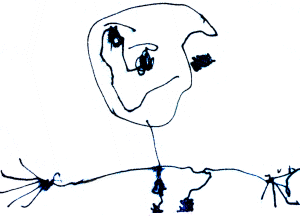
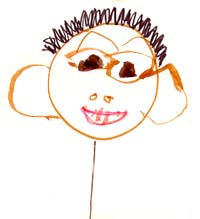
  • Autism kids’ artwork

     Wwanyoustuff!


    We are busy making  Autism/PDD Resources Network  your community site, so send us your stuff! Kids’ artwork or stories, comments, complaints…whatever!! You can email artwork or photos as attachments.


    Click to enlarge
     

    1) Danny’s story – age 16


    2) Ben’s writing – age 8


    3) Poem by PDD child, age 11


    Danny – made recently at age 16.


    Amanda – age 13


    Danny – made at age 7                                          Daniel – age 9Stephanie – age 10                 Danny- age 6                   Jonathan – age 12

     
    Amazon.com Children Books
     

    Kids Corner 


    Encyclopedia
    Thinking Skills Fun
    Yahooligans
    The Electronic Zoo
    Library for Schoolkids
    The Nine Planets
    Smithsonian Museum
    Life in the White House
    NASA-Space Science
    Old Sturbridge Village Space Image Library 
    Research-It Martian Sun-Times


    Support: Sibshops and Other Sibling Programs


            © Copyright Autism-PDD Resources Network

  • Autism Advocacy Agencies by state

      A    C    D      G   H    I      L   M    N   O    P   R     T   U    V   W

    ALABAMA

    Reuben W. Cook
    Ex. Director
    Alabama Disabilities Advocacy Program
    Adap 526 Martha Parham, West
    P.O. Box 870395
    Tuscaloosa, Alabama 35487-0395

    (205) 348-4928
    TDD             205-348-9484
    800-826-1675
    FAX (205) 348-3909

    ALASKA

    Rick Tessandore
    Executive Director
    Disability Law Center of Alaska
    615 East 82nd Avenue
    Suite 101
    Anchorage, Alaska 99518-3158

    (907) 344-1002       V/TDD
    800-478-1234
    FAX (907) 349-1002
    E-mail – Disablaw@anc.ak.net

    AMERICAN SAMOA

    Minareta Thompson
    Ex. Director
    Office of Protection and Advocacy
    for the Disabled
    American Samoa Government
    Post Office Box 3937
    Pago Pago, American Samoa 96799-0320

    00 for overseas operator
    011(684) 633-2441
    011(684) 613-4163
    FAX (684) 633-7286

    ARIZONA

    Leslie J. Cohen
    Executive Director
    The Arizona Center for Disability Law
    3131 North Country Club
    Suite #100
    Tucson, Arizona 85716            (520) 327-9547       Voice\TDD
    FAX (520) 323-0642
    1-800-922-1447
    PHOENIX OFFICE –             1-800-927-2260

    ARKANSAS

    Nan Ellen D. East
    Executive Director
    Advocacy Services, Inc.
    1100 North University, Suite 201
    Evergreen Place
    Little Rock, Arkansas 72207

    (501) 296-1775       V/TDD
    1-800-482-1174       V/TDD
    Fax (501) 296-1779
    E-Mail – advocacy@aristotle.net
    E-Mail – hn5322@handsnet.org


    CALIFORNIA 
    Catherine Blakemore
    Executive Director
    Protection & Advocacy, Inc.
    100 Howe Avenue, Suite 185N
    Sacramento, California 95825

    916-488-9955       Admin Off.
    916-488-9950       Legal Off.
    800-776-5746
    (FAX) 916-488-2635
    E-Mail 1232@handsnet.org
    E-Mail cathyb@sacramento.pai-ca.com

    COLORADO 
    Mary Anne Harvey
    Executive Director
    The Legal Center
    455 Sherman Street, Suite 130
    Denver, Colorado 80203-4403 

                (303) 722-0300       Voice\TDD
    FAX 303 722-0720
    E-Mail hn6282@handsnet.org

    CONNECTICUT

    James McGaughey (Jim)
    Executive Director
    Office of Protection and Advocacy for Persons with Disabilities
    60-B Weston Street
    Hartford, Conneticut 06120-1551

    (860) 297-4300
    800-842-7303       (State-wide)
    (860) 566-2102       (TDD & voice)
    FAX 860-566-8714
    E-Mail hn2571@handsnet.org
    E-Mail hn6587 Ex.Dir@handsnet.org


    DELAWARE 
    Judith Schuenemeyer
    (FUNDING) Ex. Director
    Community Legal Aid Society, Inc.
    913 Washington Street
    Wilmington, Delware 19801

    (302) 575-0660
    FAX 302-575-0840

    Brian Hartman
    (PROGRAM)  Director
    Disab. Law Program
    913 Washington Street
    Wilmington, Delaware 19801

    (302) 575-0690
    FAX 302-575-0840 


    DISTRICT OF COLUMBIA

    Jane Brown, Esq.
    Executive Director
    University Legal Services, Inc. (ULS)
    300 I Street, N.E., Suite 202
    Washington, D.C. 20002

    (202) 547-4747
    FAX 202-547-2083/2662


    FLORIDA 
    Marcia Beach
    Executive Director
    Advocacy Center for Persons with Disabilities, Inc.
    2671 Executive Center, Circle, West
    Webster Building, Suite-100
    Tallahassee, Florida 32301-5092

    (850) 488-9071
    1-800-342-0823
    FAX 850-488-8640
    TDD             1-800-346-4127


    GEORGIA 
    Dr. Joyce R. Ringer
    Executive Director
    Georgia Advocacy Office, Inc.
    999 Peachtree Street, N.E.
    Suite 870
    Atlanta, Georgia 30309-3166

    (404) 885-1234       Voice\TDD
    1-800-537-2329
    FAX (404) 607-8286
    E-Mail hn5298@handsnet.org


    GUAM

    Eduardo R. del Rosario (Eddie)
    Executive Director
    Protection and Advocacy of the Marianas (PAM)
    Reflection Center, Suite 204
    Chalan Santo Papa
    Agana, Guam 96910

    011-(671) 472-8985/86
    FAX 011-671-472-8989
    E-Mail hn5986@handsnet.org


    HAWAII 
    Gary L. Smith
    Executive Director
    Protection and Advocacy Agency
    1580 Makaloa Street
    Suite 1060
    Honolulu, Hawaii 96814-3237

    (808) 949-2922       Voice/TDD
    FAX (808) 949-2928
    E-Mail hn4981@handsnet.org


    IDAHO 
    James R. Baugh
    Executive Director
    Co-Ad, Inc.
    Idaho’s Comprehensive Advocacy, Inc.
    4477 Emerald Street, Suite B-100
    Boise, Idaho 83706

    (208) 336-5353       Voice/TDD
    Fax (208) 336-5396
    Toll Free             1-800-632-5125
    E-Mail – hn5880@handsnet.org

    ILLINOIS

    Zena Naiditch
    Executive Director
    Illinois Equip for Equality, Inc.
    11 E. Adams, Suite 1200
    Chicago, Illinois 60603

    (312) 341-0022       Voice/TDD
    FAX 312-341-0295
    E-Mail – hn6177@handsnet.org

    INDIANA

    Tom Gallagher
    Executive Director
    Indiana Advocacy Service
    4701 North Keystone Avenue
    Suite 222
    Indianapolis, Indiana 46205

    (317) 722-5555
    800-622-4845
    FAX (317) 722-5564
    E-Mail-ipas@source.isd.state.in.us

    IOWA
    Mervin L. Roth
    Executive Director
    Iowa Protection and Advocacy Service, Inc.
    3015 Merle Hay Road, Suite 6
    Des Moines, Iowa 50310

    (515) 278-2502
    FAX (515) 278-0539
    515-278-0571 TDD
    E-Mail hn5317@handsnet.org


    KANSAS 
    Jim Germer
    Acting Executive Director
    Kansas Advocacy and Protective Services
    501 SouthWest Jackson, Suite 425
    Topeka, Kansas 66603

    (913) 232-3469
    FAX 913-232-4758
    E-Mail JGermer@idir.net

    KENTUCKY

    Maureen Fitzgerald
    Acting Director
    Division for Protection and Advocacy
    Office for Public Advocacy
    100 Fair Oaks Lane, 3rd FL
    Frankfort, Kentucky 40601

    (502) 564-2967
    800-372-2988       TDD
    FAX (502) 564-7890
    E-Mail dfoy@advocate.pa.state.ky.us


    LOUISIANA 
    Lois V. Simpson
    Executive Director
    Advocacy Center for the Elderly and Disabled
    225 Baronne Street
    Suite 2112
    New Orleans, Louisiana 70112-2112

    (504) 522-2337
    1-800-960-7705
    FAX (504) 522-5507


    MAINE 
    Kimberly Moody (Kim)
    Acting Executive Director
    Maine Advocacy Services
    32 Winthrop Street
    P.O. Box 2007
    Augusta, Maine 04338-2007

    (207) 626-2774       ext. 104
    1-800-452-1948
    FAX 207-621-1419

    MARYLAND

    Elizabeth Jones
    Ex. Director
    Maryland Disability Law Center
    The Walbert Building
    1800 North Charles Street
    Suite 204
    Baltimore, Maryland 21201

    (410) 234-2791
    1-800-233-7201
    FAX 410 234-2624
    hn6313@handsnet.org


    MASSACHUSETTS 

    Christine Griffin
    Executive Director
    Disabilities Law Center, Inc. (DLC)
    11 Beacon Street, Suite 925
    Boston, Massachusetts 02108

    (617) 723-8455       Voice
    (617) 227-9464       TTD
    FAX (617) 723-9125
    1-800-872-9992
    1-800-381-0577       TDD
    E-mail hn5348@handsnet.org

    MICHIGAN

    Elizabeth W. Bauer
    Executive Director
    Michigan Protection and Advocacy Service
    106 West Allegan, Suite 300
    Lansing, Michigan 48933-1706

    (517) 487-1755      \Voice/TDD
    1-800-288-5923
    FAX (517) 487-0827
    E-mail hn5293@handsnet.org

    MINNESOTA

    Jerry Lane
    Executive Director
    Minnesota Disability Law Center
    430 First Avenue, North, Suite 300
    Minneapolis, Minnesota 55401-1780

    (612) 332-1441
    800-292-4150
    FAX (612) 334-5755
    E-mail hn0518@handsnet.org

    MISSISSIPPI

    Rebecca Floyd
    Executive Director
    Mississippi Protection and Advocacy System
    for Developmental Disabilities, Inc.
    5330 Executive Place, Suite A
    Jackson, Mississippi 39206-5606

    (601) 981-8207
    FAX 601-981-8313
    800-772-4057
    E-mail hn5999@handsnet.org

    MISSOURI

    Shawn de Loyola
    Executive Director
    Missouri Protection and Advocacy Services, Inc.
    925 S. Country Club Drive, Unit B-1
    Jefferson City, Missouri 65109

    (573) 893-3333
    800-392-8667
    FAX 573-893-4231

    MONTANA

    Bernadette Ongoy Frank
    Executive Director
    Montana Advocacy Program, Inc. (MAP)
    Post Office Box 1680
    316 North Park, Room 211
    Helena, Montana 59624

    (406) 444-3889       Voice\TDD
    800-245-4743       (MT Only)
    FAX 406 444-0261
    E-mail hn6510 Exe.Dir
    E-mail hn6511 Alan Freed, Staff Attorney


    NATIVE AMERICAN PROTECTION AND
    ADVOCACY PROJECT (NAPAP) 

    Therese Yanan
    Executive Director
    DNA)People’s Legal Services, Inc.
    Post Office Box 392
    Shiprock, New Mexico 87410

    (505) 368-3216
    1-(800)-862-7271       – Clients Only
    Fax 505 368-3220
    E-mail hn4857@handsnet.org

    NEBRASKA

    Timothy Shaw
    Executive Director
    Nebraska Advocacy Services, Inc.
    522 Lincoln Center Building
    215 Centennial Mall South
    Lincoln, Nebraska 68508-1813

    (402) 474-3183       Voice/TDD
    800-422-6691
    FAX 402-474-3274

    NEVADA

    Jack Mayes
    Executive Director
    Nevada Disability Advocacy and Law Center, Inc.(NDALC)
    401 So. Third St. Suite 403             800-992-5715       Toll Free (within Nevada)
    Las Vegas, Nevada 89101

    (702) 383-8150
    (702) 383-8170/TDD
    FAX 702-383-8170

    NEW HAMPSHIRE

    Donna Woodfin
    Executive Director
    Disabilities Rights Center
    P.O. Box 3660
    18 Low Avenue
    Concord, New Hampshire 03302-3660

    (603) 228-0432       Voice/TDD
    800-834-1721       (NH Only)
    FAX 603-225-2077
    E-mail hn6217@handsnet.org

    NEW JERSEY

    Sarah Wiggins Mitchell
    Ex. Director
    NJ Protection and Advocacy Inc.
    210 South Broad Street, 3rd Floor
    Trenton, New Jersey 08608

    (609) 292-9742
    800-792-8600
    FAX 609 777-0187
    E-mail hn5621Exe.Dir
    hn5622Rick Considine

    NEW MEXICO

    James Jackson
    Executive Director
    P&A System
    1720 Louisiana Blvd., N.E., Suite 204
    Albuquerque, New Mexico 87110

    (505) 256-3100/Voice\TDD
    800-432-4682
    Fax 505 256-3184
    E-mail hn5412@handsnet.org

    NEW YORK

    Clarence J. Sundram
    Chairman
    NY Commission on Quality of
    Care for the Mentally Disabled
    99 Washington Avenue, Suite 1002
    Albany, New York 12210

    (518) 473-4057
    (518) 473-7378
    800-624-4143       (TDD)
    FAX 518 473-6296
    E-mail hn5344@handsnet.org (PAIMI)
    hn5345@handsnet.org (PADD)

    NORTH CAROLINA

    Allen Perry
    Exec. Director
    Governor’s Advocacy Council for
    Persons with Disabilities
    2113 Cameron Street, Suite 218
    Raleigh, North Carolina 27605-1344

    919 733-9250/Voice\TDD
    FAX 919 733-9173
    800-821-6922

    NORTH DAKOTA

    Teresa Larson
    Executive Director
    Protection and Advocacy Project
    400 E. Broadway, Suite 616
    Bismarck, North Dakota 58501 
                (701)-328-2950
    800-472-2670/Voice\Tool free
    800-642-6694       (24H. Line)
    FAX 701-328-3934
    E-mail Beckatpa@aol.com

    NORTHERN MARIANA ISLANDS

    Lydia Barcinas Santos
    Executive Director
    Northern Mariana P&A System, Inc.
    Post Office Box 3529 C.K.
    Saipan, MP 96950

    011-(670) 235-7273/4/6
    TTY – 011(670) 235-7278
    FAX – 011-670 235-7275


    OHIO 
    Carolyn Knight
    Executive Director
    Ohio Legal Rights Service
    8 East Long Street, 6th Floor
    Columbus, Ohio 43215-2999

    (614) 466-7264/Voice\TDD
    800-282-9181
    FAX (614) 644-1888
    E-mail hn7149@handsnet.org

    OKLAHOMA

    Kayla Bower
    Executive Director
    Oklahoma Disability Law Center, Inc.
    2915 Classen Blvd., Suite 300
    Oklahoma City, OK 73106

    (405) 525-7755
    800-880-7755
    FAX 405 525-7759

    OREGON

    Robert Joondeph
    Executive Director
    Oregon Advocacy Center
    620 S.W., Fifth Ave., 5th Floor
    Portland, Oregon 97204-1428

    (503) 243-2081
    800-452-1694
    TDD             800-556-5351
    FAX 503-243-1738
    E-mail hn6919@handsnet.org
    E-mail oradvocacy@aol.com


    PENNSYLVANIA 
    Kevin T. Casey
    Executive Director
    Pennsylvania Protection and Advocacy, Inc.
    116 Pine Street
    Harrisburg, Pennsylvania 17101-1208

    (717) 236-8110/Voice\TDD
    800-692-7443
    FAX 717 236-0192
    E-mail hn6067@handsnet.org

    INTERNET – 102126.1251@COMPUSERVE.COM

    PUERTO RICO

    David Cruz Veles
    Executive Director
    Office of the Ombudsman for the Disabled Persons
    Caribbean Office Plaza,
    Ponce de Leon Avenue
    #670 Miramar
    Puerto Rico 00907 P.O Box 4234
    San Juan, Puerto Rico 00902-4234

    787-729-4299
    (787) 721-4299 Ombudsman
    787-725-2333 mESSAGE/V
    Deputy 787-725-3606
    L 800 981-4125
    FAX 787-721-2455


    REP OF PALAU 
    (Vacant)
    Executive Dir.
    Client Assistance Program
    Bu. of Public Health
    Ministry of Health
    P.O. Box 6027
    Koror, Republic of Palau 96940

    011-680-488-2813
    FAX 011-680-488-1211

    RHODE ISLAND

    Ray Bandusky
    Ex. Director
    Rhode Island Disability Law Center, Inc.
    349 Eddy Street
    Providence, Rhode Island 02903

    (401) 831-3150
    401-831-5335/TDD
    1-800-733-5332
    FAX 401-274-5568


    SOUTH CAROLINA 
    Gloria Prevost
    Executive Director
    Protection and Advocacy for
    People with Disabilities, Inc.
    3710 Landmark Drive, Suite 208
    Columbia, South Carolina 29204-4034

    (803) 782-0639/Voice\TDD
    800-922-5225
    Fax (803) 790-1946

    SOUTH DAKOTA

    Robert J. Kean
    Executive Director
    South Dakota Advocacy Services
    221 South Central Avenue
    Pierre, South Dakota 57501

    (605) 224-8294/Voice\TDD
    800-658-4782
    FAX 605-224-5125


    TENNESSEE 
    Shirley Shea
    Executive Director
    Tennessee P&A Inc.
    P.O. Box 121257 (Mailing Address)
    2416 21st Ave., South
    Nashville, Tennessee 37212-1257 

    (615) 298-1080/Voice\TDD
    800-342-1660
    FAX 615-298-2046

    TEXAS

    Jim Comstock-Galagan
    Executive Director
    Advocacy, Inc.
    7800 Shoal Creek Blvd., Suite 171-E
    Austin, Texas 78757-1560

    (512) 454-4816
    800-252-9108
    FAX 512-323-0902
    E-mail hn2414@handsnet.org


    UTAH 
    Ms. Fraiser Nelson
    Executive Director
    Legal Center for People w/Disabilities
    455 East 400 South, Suite 410
    Salt Lake City, Utah 84111

    (801) 363-1347/Voice\TDD
    800-662-9080
    FAX 801 363-1437
    E-mail hn5856@handsnet.org


    VERMONT 
    William Sullivan (Bill)
    Executive Director
    Vermont Protection and Advocacy Inc.
    21 East State Street, Suite #101
    Montpellier, Vermont 05602

    (802) 229-1355
    FAX 802 229-1359

    VIRGINIA 
    Sandra K. Reen (Sandy)
    Ex. Director
    Dept. for the Rights of Virginians
    with Disabilities
    James Monroe Bldg.
    101 N. 14th Street, 17th Floor
    Richmond, Virginia 23219-3641 

    (804) 225-2042/Voice\TDD
    800-552-3962
    FAX 804 225-3221

    VIRGIN ISLANDS

    Ameila Headley Lamont, Esq.
    Ex. Director
    Virgin Islands Advocacy Agency
    7A Whim Street, Suite 2
    Frederiksted, Virgin Islands 00840

    (809) 772-1200, 4641/TDD
    809-776-4303
    FAX 809 772-0609
    E-mail hn5454@handsnet.org


    WASHINGTON 
    Mark Stroh
    Executive Director
    Washington Protection and Advocacy System (WPAS)
    1401 E. Jefferson Street
    Suite 506
    Seattle, Washington 98122

    (206) 324-1521
    FAX 206-324-1783
    E-mail wpas@halcyon.com

    WEST VIRGINIA

    Linda A. Leasure
    Executive Director
    WV Advocates, Inc.
    Litton Bldg., 4th Fl.
    1207 Quarrier Street
    Charleston, West Virginia 25301-1842

    (304) 346-0847/Voice\TDD
    800-950-5250
    FAX 304-346-0867
    E-mail wvadvocates@newwave.net

    WISCONSIN

    Lynn Breedlove,
    Executive Director
    Wisconsin Coalition for Advocacy, Inc.
    16 N. Carroll Street FAX
    Suite 400
    Madison, Wisconsin 53703

    (608) 267-0214
    800-928-8778
    (608) 267-0368
    E-mail yochupa@wp.dhss.state.wi.us

    WYOMING

    Jeanne A. Thobro
    Executive Director
    P&A System, Inc.
    2424 Pioneer Avenue, #101
    Cheyenne, Wyoming 82001-3075

    (307) 638-7668
    307-632-3496
    800-821-3091       Voice/TDD
    800-624-7648
    FAX (307) 638-0815
    E-mail hn4927@handsnet.org National Organization

    Mr. Curtis Decker
    National Association of Protection and Advocacy Systems
    900 2nd Street, N.E., Suite 211
    Washington, D.C. 20002
    (202) 408-9514
    FAX – 408-9520

    Carole Schauer
    Contact Person
    Program Officer
    Protection and Advocacy Program
    Center for Mental Health Services(CMHS)
    Room 15C-26
    5600 Fishers Lane
    Rockville, Maryland 20857
    (301) 443-3667
    FAX (301) 594-0091

    Bernard Arons
    Director, CMHS
    Room 15-105
    5600 Fishers Lane
    Rockville, Maryland 20857
    (301) 443-0001
    FAX (301) 443-1563

    BACK TO TOP

    Visit these sites for more information
    coming soon…
  • Sensory Integration Therapy

    Sensory Integration Therapy is used with individuals who have sensory integration difficulties. Jean Ayres, an occupational therapist, first described sensory integration dysfunction as a result of inefficient neurological dysfunction. The auditory, visual, tactile, taste, smell, vestibular and propioceptive senses are what give us information about the world around us. Individuals with sensory processing disorders have senses that are inaccurate and send false messages. Children and adults with hypersensitivity overreact to stimuli, while others have hypo-sensitivity, which prevents them from picking up information through their senses. Sensory malfunction can also be an inability to understand and organize sensory information when it is received.


    Sensory integration dysfunction symptoms are many and varied depending on which sense or senses are perturbed. When he has auditory sensitivities a child may cover his ears, overreact or underreact to noise, or try to escape from groups. Tactile sensitivities can be indicated by a seemingly high tolerance for pain, refusal to keep socks and shoes and sometimes clothes on, difficulty in brushing teeth and hair, dislike of having hair washed. Visual issues may be apparent if a child is sensitive to light, likes to watch things spin or move (tops, hands on a clock), spins himself or other things or turns lights on and off. These are a few examples of behaviors that display sensitivities in certain areas; Sensory issues are not autism-specificMany children and adults who have sensory disorders do not have an ASD. Although Sensory Integration Difficulties are not a diagnostic criteria for ASD, practically all adults on the autism spectrum report having some kind of difficulties in sensory processing.


    Sensory Integration Therapy is practiced by occupational therapists, who contend that many behaviors exhibited by children and adults with autism are an attempt to avoid certain types of sensations or to seek preferred stimuli, in order to balance out their nervous system. There are different strategies that are used. Occupational therapists who are well trained in sensory integration have designed individual programs and sensory diets that have led to improvements in behavior and skills by assisting individuals with ASDs to process and use sensory information. When looking for therapy providers, it is important that you choose therapy providers who have experience with ASDs and the age group of the person seeking treatment.


    For more information: http://www.comeunity.com/disability/sensory_integration/resources.html

  • Books about Autism Spectrum Disorders

     B O O K S  T O  E X P L O R E 


    Targeting Autism : What We Know, Don’t Know and Can Do to Help Young Children With Autism and  Related  Disorders – Calling attention to recent advances in early identification and educational therapy, this book offers up-to-date research findings within a scientific framework enriched by author’s own observations and narratives from parents and adults with autism.


    Asperger’s Syndrome: A Guide for Parents and Professionals is honest, yet optimistic about the strengths and weaknesses associated with children having this disorder. Helpful and practical, will be useful for quite a while.


    The World of the Autistic Child walks you through the prospect of Autism/PDD from the initial diagnosis through treatment. Balanced discussion of the multiple issues any parent needs to consider. If you haven’t already, you will soon discover that the treatment community is highly polarized. This book help you sort out what you read and hear elsewhere.


    Play and Imagination in Children With Autism goes beyond the usual autism literature by examining the complex problems children with autism experience in reciprocal social interaction, communication and imagination,  by looking closely at the nature of the disorder in relation to play’s role in childhood culture and development, as well as contemporary intervention practices.


    The Out-Of-Sync Child: Recognizing and Coping With Sensory Integration Dysfunction is not about autism, however, a very common  condition in autistic children; can manifest itself in excessively high or low activity levels, problems with motor coordination, over sensitivity or under sensitivity to sensations and movements, and other symptoms. This book carefully details many helpful routines and remedies.


    Teaching Children With Autism:discuss the behavioral characteristics of autism, intervention methods, and key topics such as spontaneous language, along with concrete ways to support families, focus on long term gains and short term problem solving.


    Laying Community Foundations: For Your Child With a Disability : How to Establish Relationships That Will Support Your Child After You’re Gone address specific ways to help disabled children, teenagers and adults establish these crucial long-term relationships, offer insight into relationships with siblings, give general time frames for  accomplishing the various steps in a long term care plan, and offer examples and checklists.


    Autism : Preparing for Adulthood is clear and practical, essential for anyone concerned with the challenges facing teenagers and young adults with Asperger syndrome, PDD/NOS or high-functioning autism.


    Growing Up With Language: How Children Learn to Talk is a reader friendly book, that is not intended to offer a course in linguistics.Throughout the book, Baron illustrate many language learning milestones.


    Teaching Children With Autism to Mind-Read: A Practical Guide for Teachers and Parents
    This is the first guide on applying Theory of Mind–the ability to infer the mental states of others and use this information to interpret their behavior–to children with autism. It concentrates on the effective treatment of social and communicative abnormalities in children with autism, guiding the reader through the underlying experimental and clinical principles. It then gives a graded program for teaching children each of these skills. 


    The Complete IEP Guide: How to Advocate for Your Special Ed. Child  clearly outlines IEP, how to arrange the best possible program for a child, how to resolve disputes with school districts, have  letters and forms which can be copied, and more.


    Pragmatic Development (Essays in Developmental Science) provides an integrated view of how children acquire
    the various subsystems of rules for appropriate and communicatively effective language use,  including expression of communicative intents, participation in conversation, and production of extended discourse.


    Intervention Planning for Children With Communication Disorders: A Guide for Clinical Practicum and  Professional Practice  explores the problem solving and decision making process involved  in clinical intervention planning across categories of children’s communication disorders. Includes case studies of four children with language, phonology, fluency, and voice disorders.

    Soon Will Come the Light : A View from Inside the Autism Puzzle
    Thomas McKean, an autistic author,  successfully provides the reader with a new wealth of insight into areas known only to those individuals with autism.
    McKean’ description of what he experiences when he “tunes out” is quite fascinating.  He enters a world of alternate reality created within the boundary of his imagination. A scary darkness leads to majestic mountains, a castle, a dragon field, a domed city, ocean, sunken ship, red fluorescent caverns, forest, and abandoned mansion. He expresses a fear of exploring too far and being unable to find his way back… How many of us wonder what our children with autism see when they have that far away look in their eyes?


  • Autism Resources

    FAQ about Autism Special Education and IEP

    This is an important list of questions and answers to help you deal with special education issues at your school.

    Autism Tips for working with Teachers

    This is a great check list of items to be aware of when you work with your child’s teacher and your child’s Individual Education Plan.

    Tip: Go to our Autism education discussion boards and post a question with other parents.


    Visit these sites for more information
    Early Origins of Autism

    Ask an Expert on Autism

    Health Finder

    Talk to Autism Expert

    National Institutes of Mental Health

    Combined Health Information Database

    Abstracts on Autism

  • Autism Spectrum Disorders

    There are several Autism Spectrum Disorders which include PDD (Pervasive Developmental Disorder, Asperger’s Syndrome, Rett’s Syndrome and High-Functioning Autism.


    Asperger syndrome: A milder form of autism where children tend to isolate themselves socially and are somewhat eccentric. They have difficulty with verbal communication and have interests that are very channeled.

    If an infant does not cuddle, make eye contact or respond  to affection  and touching, or have abnormal responses to a combination of senses; such as hearing, balance, smell, taste and reaction to pain, parents should be seriously concerned.

    This lack of responsiveness may be accompanied by an inability to communicate appropriately, and by a persistent failure to develop two-way social relationships. The language skills may be poor, even nonexistent, sometimes repeating words or phrases in place of normal language or using gestures and pointing instead of words.

    Pervasive Developmental Disorder and not otherwise specified (PDD-NOS) – This child has autism but doesn’t meet the criteria for high functioning autism.

    High-Functioning Autism – This child has autism but has normal learning and cognitive and learning skills. Language development is difficult initially but they become proficient eventually.

    Rett’s Syndrome

    This disorder affects only female and is extremely rare affecting only only one in 100,000 children. This disorder starts with hand wringing movements that are so dramatic that a child may have problems feeding themselves. These children may also develop the criteria for autism as well.


    Visit these sites for more information
    Autism Society of AmericaAsperger and PDD Information by MAAP Services

    National Institutes of Mental Health on Rett’s Syndrome

  • Autism Research at the Duke Center for Human Genetics

    Description

    Autism is a chronic, nonprogressive developmental disorder. Individuals with autism have a unique set of symptoms in three areas: socialization (interaction with others), communication, and behavior. Autism is a common disorder, when other diagnoses such as pervasive developmental disorder (PDD), pervasive developmental disorder (not otherwise specified – PDD-NOS), and Asperger’s disorder are included in the spectrum.Autism is a complex genetic disorder thought to be caused by one or more genes, either acting alone or together with other factors. Through the Medical Genetics collaborative research study into the hereditary basis of autism, we hope to find the gene(s) that leads to autism. Finding these gene(s) will provide valuable insight into how the disorder is caused and will hopefully lead to improved diagnostic and treatment modalities.

    Can Autism Be Inherited?

    We are often asked the question, Am I at risk for having a child with autism or having another child with autism? The answer is not simple since autism has many causes. Some individuals may have a genetic form of autism. If possible, the underlying cause for the autistic-like behavior must be identified. Several inherited disorders are associated with autistic-like behavior. Some of these disorders include Fragile X Syndrome, Tuberous Sclerosis Complex (TSC), and Phenylketonuria (PKU). When a diagnosis of autistic disorder is made by a health care provider, it is important to determine whether the behavior is the result of one of these well known genetic disorders. If specific testing indicates one of these disorders is responsible for the behavior, the recurrence risk and perhaps the medical treatment will be altered.In most cases, there is no specific cause for autism in an individual. In these instances, the autism is said to be idiopathic, meaning that the behavior is secondary to an unknown cause. These non-specific answers can be frustrating for parents or family members who would like some explanation.

    In this research study, we include individuals and families with idiopathic autism because these are the individuals most likely to carry the gene or genes that cause autism. By finding the genetic factors that play a role in the development of autism, we will someday be able to provide accurate recurrence risks to individuals and families as well as develop better treatments.

    For families that have one child with idiopathic autism, there is an increased risk of having another child with autism. This recurrence risk is estimated to be about four percent which is greater than that found in families that do not have a child with autism.

    Spiker D., Lotspeich L., Kraemer H.C., Hallmayer J., McMahon W., Petersen P.B., Nicholas P., Pingree C., Wiese-Slater S., Chiotti C. et al. Genetics of autism from 37 multiplex families: American Journal of Medical Genetics 54:1, 27-35, 1994.

    Evidence Against X-linkage as a Major Cause of Autism

    Since it is a known fact that more males have autism than females, researchers believed that autism might be associated with a non-working gene on the X chromosome. Recent data for our group and others have shown that it is unlikely that a gene on the X chromosome causes the majority of cases of autism.

    How do we know this? By studying many different families in which more than one member has autism, or a variant of autism such as Asperger’s syndrome or PDD, we have seen that in a number of families the “gene” is passed through the father to a male child with autism. Since a father transmits an X chromosome only to his daughters and not his sons, the “gene” cannot be on the X chromosome in these families.

    Cuccaro M.L., Wolpert C.M., McClintock D.E., Abramson R., Beaty L.M., Storoschuk S., Zimmerman A., Frye V., Porter N., Cook E., Stevenson R., DeLong G.R., Wright H.H., Pericak-Vance, M.A. Familial aggregation in autism: Evidence against X-linkage as a major genetic etiology. American Society of Human Genetics 1996.

    Hallmayer J., Spiker D., Lotspeich L., McMahon W.M., Petersen P.B., Nicholas P., Pingree C., Ciaranello R.D. Male-to male transmission in extended pedigrees with multiple cases of autism. American Journal of Medical Genetics. 67:13-18, 1996.

    Serotonin and Autism: What We Know So Far

    Serotonin is a chemical that functions as a neurotransmitter (chemical communicator) in our brains. (Specifically, serotonin is concentrated in a part of the brain stem called the raphe nucleus). Serotonin is also present in certain blood cells called platelets. It is thought to be involved in inducing sleep, sensory perception, temperature regulation, and control of mood. Serotonin is of interest to autism researchers because some individuals with autism have consistently been found to have high levels of serotonin in their blood stream platelets. However, it is unclear what a high serotonin level signifies.Dr. Cuccaro and his colleagues at W.S. Hall Psychiatric Institute/USC School of Medicine in Columbia, South Carolina may have discovered an important clue. They conducted a study that looked at the level of blood (platelet) serotonin and the verbal ability of individuals with autism and their immediate relatives. Using a well accepted IQ test (Wechsler scales), these researchers found that individuals with high serotonin platelet or blood levels, had lower verbal ability scores. However, other measurements of intellectual abilities were not changed, including visual-spatial ability or memory. Intelligence is a combination of many different abilities including verbal, visual-spatial ability, memory and other areas.

    What does this mean for individuals with autism and their immediate relatives? First, it provides one more biological clue about autism. While not all individuals with autism have high blood serotonin levels, many individuals do. Perhaps individuals with autism and high serotonin levels have one type of autism or perhaps high blood serotonin levels influence the signs and symptoms associated with autism. More research is needed before the relationship between serotonin levels and autism is understood.

    Currently, a high or low blood serotonin level does not alter in any way how individuals with autism are managed medically. Occasionally, medications called serotonin reuptake inhibitors (e.g. Fluoxetine, Sertraline and Paroxetine) are prescribed for some individuals with autism. (This type of medication is also widely used to treat depression). Serotonin reuptake inhibitors keep serotonin in the brain longer so that its function as a chemical communicator is further enhanced. Studies in different populations of autistic individuals will help establish which individuals with autism will benefit from serotonin reuptake inhibitors or other drugs that influence blood and brain serotonin levels.

    Cuccaro, M.L., Wright, H.H., Abramson, R.K., Marstellar, F.A., Valentine, J. Whole-blood serotonin and cognitive functioning in autistic individuals and their first-degree relatives. The Journal of Neuropsychiatry and Clinical Neurosciences. 1993; 5: 94-101.

    Total Brain Volume Can Be Greater In Individuals with Autism

    Thirty eight high-quality magnetic resonance image (MRI) scans of individuals with autism who were more than 12 years old were obtained. In addition, 38 MRIs of individuals over 12 years of age who did not have autism were also obtained. These MRIs were used as controls. Through careful measurement of the volume of the brain, Piven et al. reported that in almost half of the individuals with autism, the total brain volume was greater than in individuals without autism.These results confirm earlier MRI findings reported by the same group. These results suggest a problem in brain development (as opposed to a later injury). Unpublished data suggest that the enlargement may occur in particular regions of the brain and is not a generalized phenomenon. These results should provide important clues about the neurobiology of autism. For example, a new group of genes that are responsible for brain growth have recently been discovered. Abnormalities in these genes may underlie our findings of regional brain enlargement in autism. Also, since brain enlargement occurred in almost half (46%) of the subjects studied, brain size and shape may aid us in eventually identifying subgroups of autistic individuals with different causes for their autism. Dr. Piven and his associates are continuing to study imaging data and will be trying to obtain further funding to follow-up these results over the next year.

    Piven J., Arndt S., Bailey J., Havercamp S., Andreasen N.C., Palmer P. An MRI study of brain size in autism. American Journal of Psychiatry: 12: 1145-1149, 1995.

    Improvement In Autistic Behavior Seen As Individuals Age

    At the April 1995 Society for Research in Child Development Meeting, Dr. Piven and his research group presented the results of their behavioral studies. They reviewed data on the current autistic behaviors in 38 high-functioning adolescent and adult autistic individuals and compared it to their behaviors at age 5 years. These researchers found that there was clear improvement in all three domains of behavior that define autism.However, the most substantial change occurred in the social and communication behaviors. Eighty percent of the males and one hundred percent of the females improved their social and communication skills. Both males and females had fifty percent improvement in ritualistic-repetitive behaviors. Dr. Piven and his colleagues are continuing their study of the course of behavioral change in autism.

    Piven J., Harper J., Palmer P., and Arndt S. Course of behavioral change in autism: a retrospective study of high-IQ adolescents and adults. Journal of the American Academy of Child Adolescent Psychiatry 35:4, 523-29, 1996.


    Center for Human Genetics Autism Research

    To help us reach the goal of discovering the genetic, or inherited causes of autism, we collaborate with other researchers and medical centers. Our growing team now includes other experts in the fields of autism and genetic research. Our collaborators include Robert DeLong, MD of Duke University Medical Center, Dr.’s Ruth Abrahmson, Mike Curcarro and Harry Wright of the W.S. Hall Psychiatric Institute (Columbia, SC), Joseph Piven, MD at the University of Iowa (Iowa City, IA), Susan Folstein, MD at Tufts University (Boston, MA), Nina Sajaniemi, PhD at Helsinki University Central Hospitial (Helsinki, Finland), and their research groups.In order to find the genes for autism, we compare the genetic material (DNA) of individuals with autism to their family members without autism. We also compare genetic material between the families that have members with autism. The genetic material is obtained through blood samples. Once a family decides to join our study, we request all participating family members to give a blood sample. We also review family and medical history and conduct the Autism Diagnostic Interview (ADI) in order to confirm the diagnosis of the family member(s) with autism. However, families will not have to travel to Duke University Medical Center in order to participate. Instead, we try to visit the families personally to collect blood samples and diagnostic information. Family physicians may also collect the blood samples and mail the samples to us. The family history interview and ADI may be done as a telephone interview at any time convenient for the family. All information shared with the Center for Human Genetics is considered medical information and thus kept confidential. Since this is an ongoing research study to identify the genes associated with autism, there are no individual test results that we can report to participating families. However, we update the families participating in our study each year through our newsletter which explains our current findings and research progress.

    This has been a productive year for the autism genetic research study. Over the past year we have had the privilege of working with more than 125 families. Sixty of these families have more than one family member with autism. We have enjoyed meeting these families and we look forward to working with them over the next few years.


    Support Organizations

    Autism Society of America (ASA)
    7910 Woodmont Avenue, Suite 650
    Bethesda, MD 20814
                (800) 3-AUTISM      
    National Alliance for Autism Research (NAAR)
    66 Witherspoon Street
    Suite 310
    Princeton, NJ 08542
                (888) 777-NAAR       (6227)
    naar@naar.org

    Center for Human Genetics Contact

    autism_mail@chg.mc.duke.edu


    Autism References

    Unavailable at this time.


    Autism Newsletter

    Available through the mail. Please call             (800) 283-4316      


    Back to CHG Home Page</p><p><font size=

  • Autism/PDD Resources Network

    The purpose of this site is to guide you to the key issues associated with Autism summery... spectrum disorders. There is a growing awareness of the nature of autism and the kinds of approaches to diagnosis, treatment and care that are likely to be effective in meeting the needs of autistic individuals and their families. The diagnosis of autism is made when specified number of characteristics listed in the DSM-IV are present, in ranges inappropriate for the child’s age. Autism diagnosis usually occurs between the ages three and five. Theautism prognosis is startlingly grim  and consistent across a broad range of  studies – about 2% will attain normal functioning, with perhaps 40% labeled  high functioning autistic. These high functioning autistic generally show some oddities of behavior, and have few or no personal friends. Yet, with appropriate intervention,   many of the autism behaviors can be positively changed, even to the point that the child or adult may appear, to the untrained  person, to no longer have autism. Like any other family faced with this diagnosis, as you explore the options and resources available in your community, you will find on the one hand the unlimited potential your child has, and, on the other, the many limits others try to place on their future. This is where a parent, facing a system with many flaws and pitfalls, must not compromise their vision of their child’s future.


    Estate Planning/Special Needs Trust


    Parents of disabled children face unique challenges in planning for their children’s social, medical and financial needs.
    Planning for the unthinkable allows you to take control of your child’s emotional and financial security…


     S I T E  I N D E X

    Introduction -Your baby and Autism

    Diagnosis & Testing States Search
    Treatments IEP
    Parents Guide Estate Planning
    Special Education TEACCH 
    Related Services 1997 Amendments
    Respite Care Booklets Online
    K-12 LD Schools  Autism By Country
    & Language
    Working with
       professionals
    Working with
       Computers
    Special Educators
    Health Insurance

    Forums
    The #Autism channel 
    Medical Experts Online – Volunteer
       experts answer your questions!

    Find the Expert.


    Disabilities resources. Go to choose your state or territory.

    Legal advocacy and  news
    Legal Consulting

    NIMH
    Specialized Housing
    LII-Education law: an overview
    Guide To SSI Eligibility
    Americans with Disabilities Act
    Advocacy Agencies
    Medline Search
    Healthfinder
    Library of Congress
    Internet Library 
    Internet Law Library 
    Social Security Online
    Toll-Free Numbers
    Special Ed.Programs
    Medical Research 
    A D A
    MedScape 
    Federal Agencies
    Pediatric services Online
    Research about Autism

    On-Line Reading:

    The Early Origins of Autism
    Avoiding Unfortunate Situations
    Face Blind! by Bill Choisser
    Articles about Autism By Thomas A. McKean
     Excerpts from ‘Now All I’ve Got Left Is Myself’ by David Miedzianik, an autistic poet.
      Helpful Articles


    top bar        Effective Communication


    Parents play a vital role in their child’s education. They are equal partners in the team that develops their child’s IEP and they care deeply how their sons or daughters learn and grow. In the course of their child’s education, parents may interact with a large number of professionals (e.g., their child’s special education teacher, general education teacher, occupational therapist, speech therapist, physical therapist, and many different consultants). 
    Being able to work effectively with different professionals, exchanging ideas, concerns and openly communicating about what’s working and what’s not, are all important elements in your child’s educational success…


    state earch web search forums diagnosis help  books webmaster

     links: Toll-Free Numbers – Advocacy Agencies – US Legal Assistance – Doctor’s Guide – MEDLINE –CHID – Untangling the Web – – Americans with Disabilities Act – Free resources for educators
    search the web:
    Type a specific questionphrase or name.


    ——— 

    Australia

    Austria 

    Belgium

    Brazil

    Canada

    Denmark

    Finland

    France

    Germany

    Israel

    Italy

    Japan

    Netherlands

    New Zealand

    Norway

    South Africa

    Spain 

    Sweden

    Switzerland

    United Kingdom


    This site under new managementFacts sheets may be  reproduced for personal use without written permission, but cannot be included in  material presented for sale or profit. Autism-PDD Resources Network information and support online and all the links andformatting from the main page ( https://www.autism-pdd.net/) are © by Autism-PDD Resources Network.
  • Treatments and Approaches for Autism

    Top


    If you use IE go HERE.Brief description of treatments and approaches above will give you an idea of what is available. Before embarking on any therapy or treatment, consult your physician.